 |
The Boyd Pistonola was developed by H C Goldman and C F Webb in London
|
|
|
|
The Boyd Pistonola was developed by H C Goldman and C F Webb in London
|
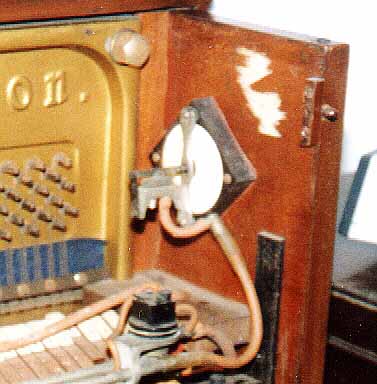
Roll motor regulator mounted on the side of the case.
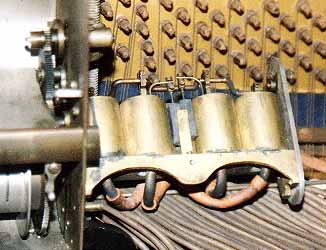
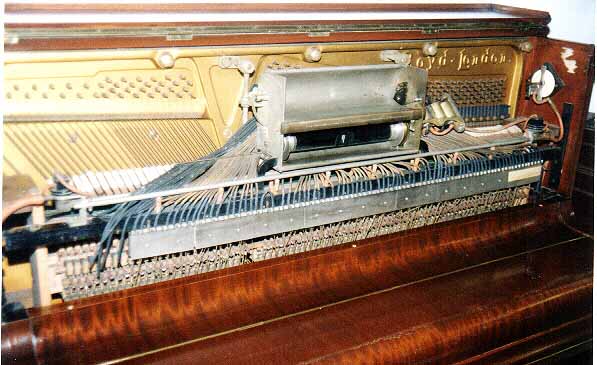
Four-piston roll motor
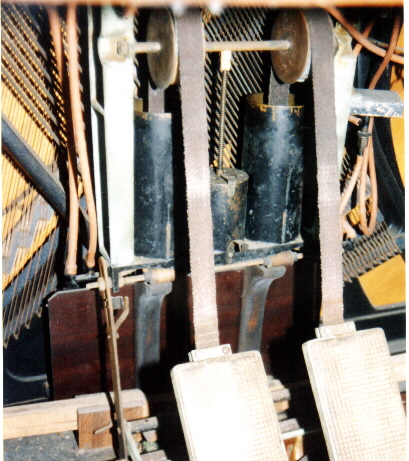
Feeder pistons and spring-loaded reservoir (center)
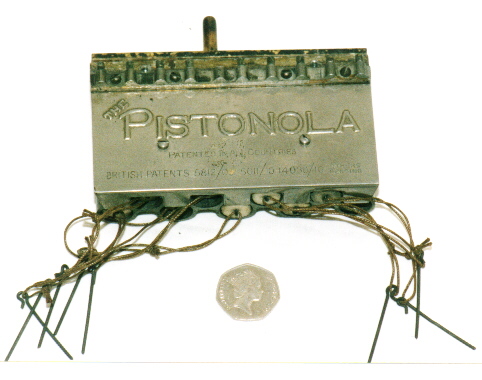
The mechanism is ingenious, being the smallest player action ever devised. In place of banks of large pneumatic motors it has a single tier of pistons for the note-striking and four in line for the roll-drive motor. Even the feeders are pistons, and the reservoir is a spring-loaded piston. Valves are ball-bearings. By the 1920s Boyd were producing a more conventional player piano.
|