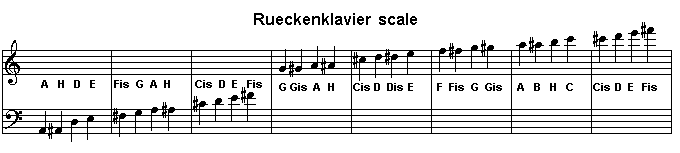
Recently I acquired a rare mechanical music instrument -- in the German language we call it Rückenklavier, i.e., a piano to be carried on the back.
I have no idea about the maker of this instrument. I am going to attach some pictures and would be happy if anybody could tell me more about the instrument.
Brief description:
9 tunes on the barrel. All these melodies are unknown and sound very strange to me. I would describe them as "Turkish" (Janitscharenmusik) [Janizary music].
The pictures show
1) total view closed instrument
2) total view open instrument
3) label, glued inside the instrument; unfortunately all text
is scratched out
4) detail of the label, showing a drawing of the instrument
5) barrel
I would appreciate any answer!
Greetings from Germany
Christian Greinacher
18 Dec 2002 212547 +0100
Hello all of you! First of all: The MMD is really great! I got many valuable replies (postings and private communications) to my questions, posted on MMD 02.12.18. I thank you all for your help to identify my Rückenklavier. Special thanks to Robbie for his work to add the image and the MIDI file of the tuning scale to my original posting.
Now let me add some additional remarks:
1. Craig Smith mentioned the brass fittings on the back of the Rueckenklavier. Yes, these fittings are all mounted on the back of my instrument. One of the brackets on the bottom of the instrument is an open hook, which makes it easier to get the strap on and off. All these fittings are not of brass, but of iron.
2. Craig was guessing that my instrument plays "Turkish" because of bad tuning and adjustment. He is absolutely right that this might happen when a beginner would try to do the job. I suffered this experience years ago, too. This time -- it's a good rule! -- I first made some basic restorations, adjustments, tuning, and checked especially the adjustment of the barrel, etc., before I started to play the instrument. I tuned it to A = 425 Hz, following the scale as burned onto the pin block. The result is, as mentioned before, Turkish "Janizary music".
3. Philip Jamison brought up the term "laterna"; what does that mean exactly? Could I find a picture of a laterna somewhere? I will try to get the EMI CD with laterna music and will compare it with the sound of my instrument.
4. As Christofer Noering mentioned, some letters printed on the label can be identified, but the rest is really very bad (same on the original label). My hope still is that somebody could identify the graphics on the label. That could be the key to find a similar or same label on any other instrument with the makers name.
5. As Robbie suggested in his email to me, I will try to find one of the many Turkish families living around here (Nuremberg!) which might have the skills to identify traditional Turkish music. But I do not feel strong enough to follow Robbie's suggestion and carry my back piano on my back to meet and ask Turkish people on the streets of Nuremberg -- it weighs 41 kg [90 pounds]!
Many thanks again, and I wish all the mechanical music enthusiasts, collectors, experts and friends Merry Christmas and all the best for the New Year!
Christian Greinacher
Roettenbach, Germany (in Frankonia, i.e., the northern part of
Bavaria, near Nuremberg)
22 Dec 2002 15:49:07 +0100
Photos and several MMD articles about the Greek laterna are at
/Pictures/laterna.html
The CD, "Nikos Armaos - Laterna kai Defi", MINOS-EMI 724383483525,
is listed at http://www.studio52.gr/grin_Nm.htm
price: 11.45 euro
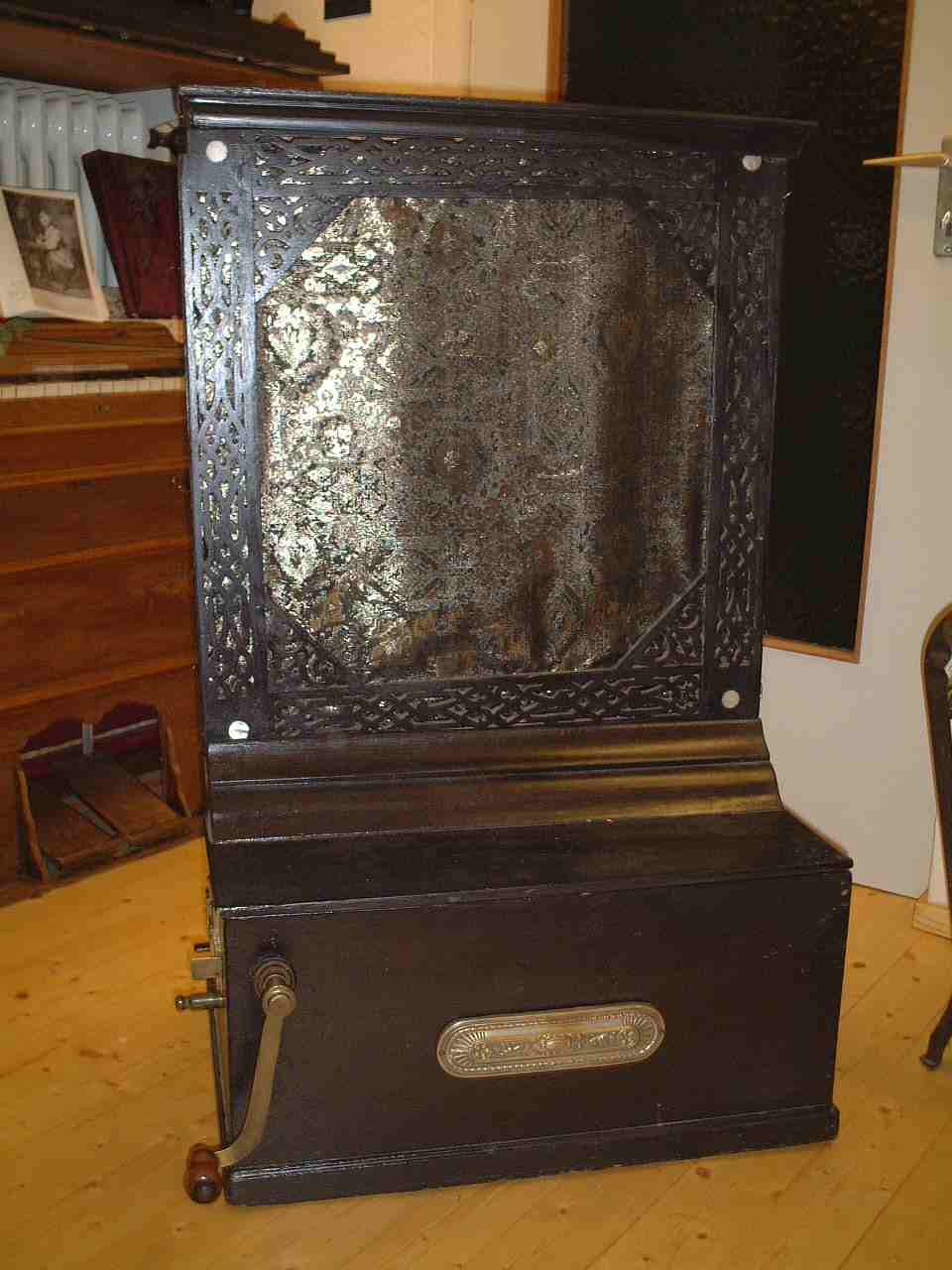
1. Total view, closed instrument.
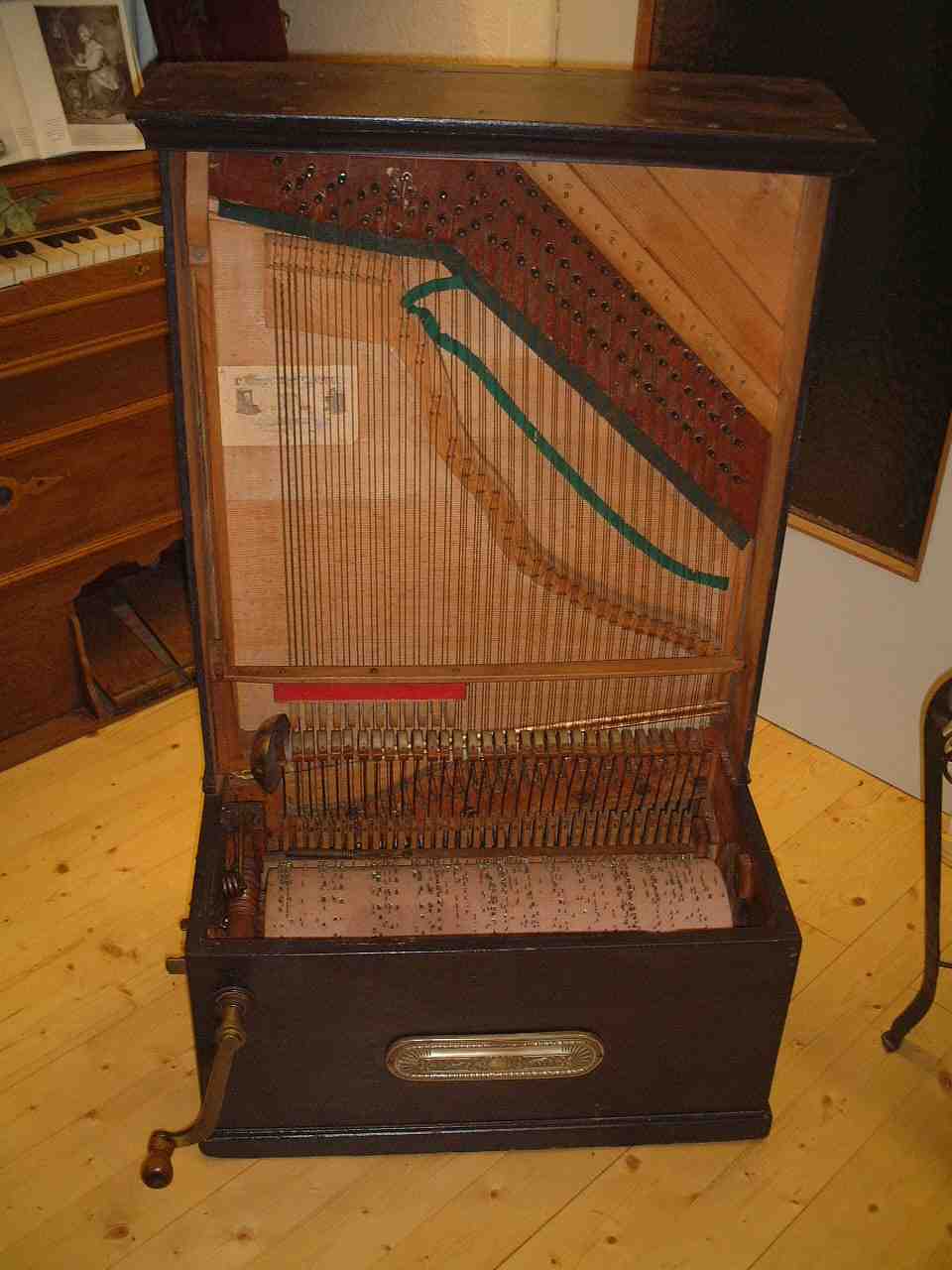
2. Total view, open instrument.
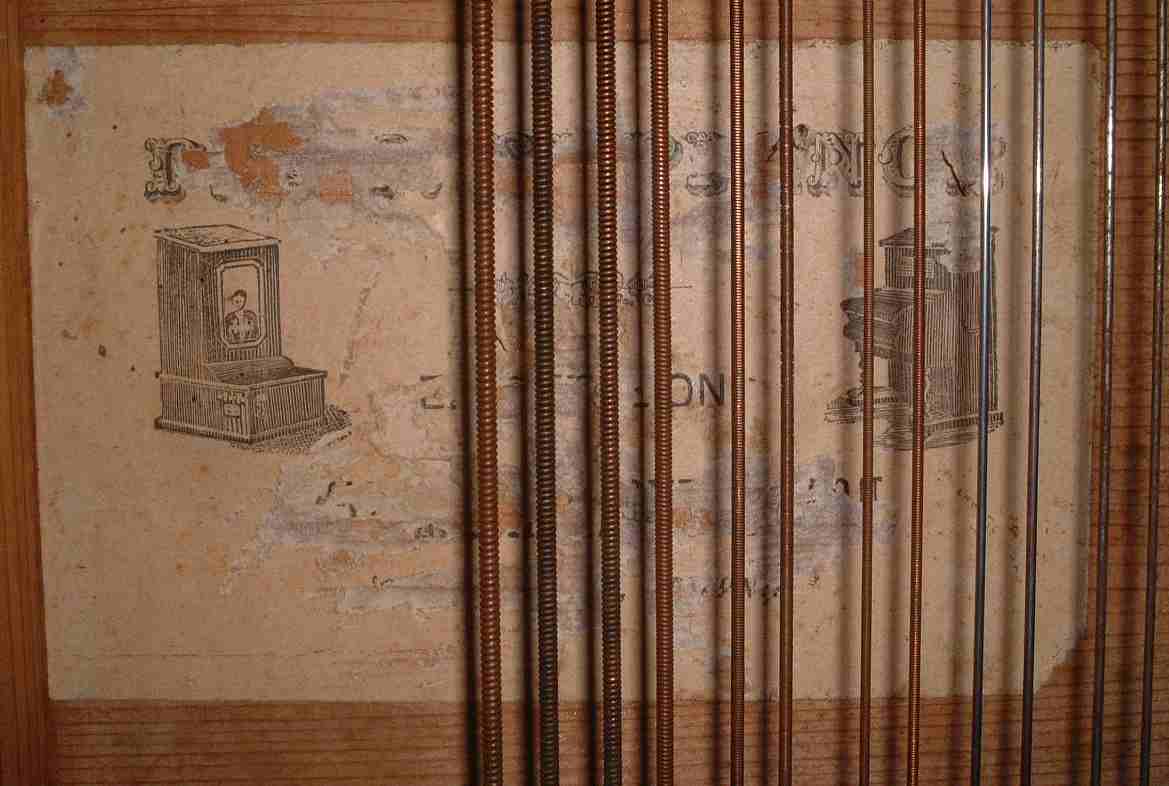
3. Label glued inside the instrument; unfortunately all text is scratched
out.
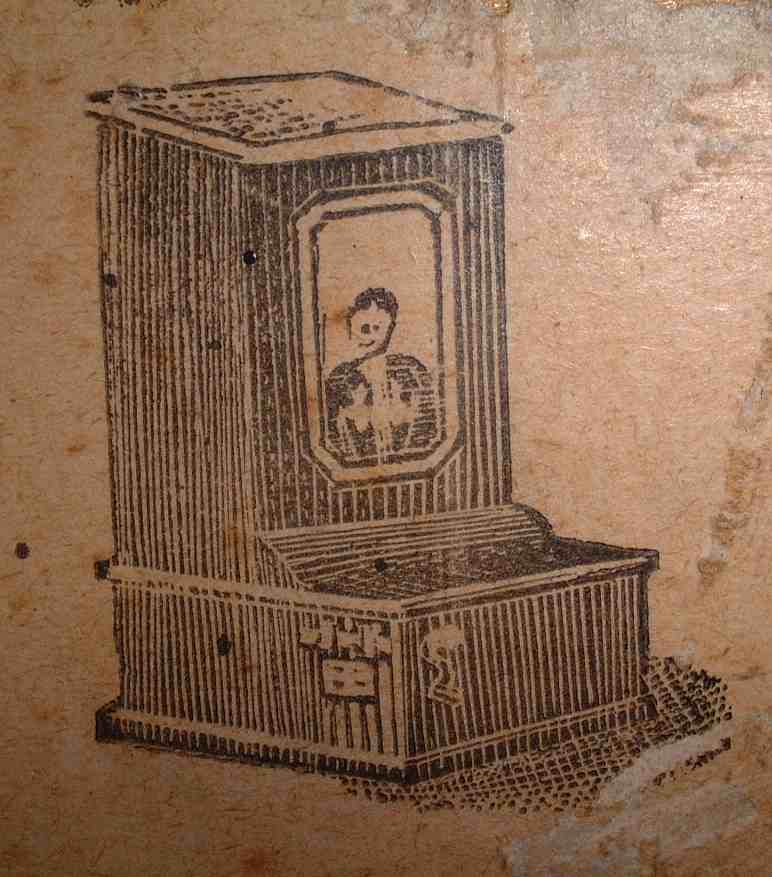
4. Detail of the label, showing a drawing of the instrument.
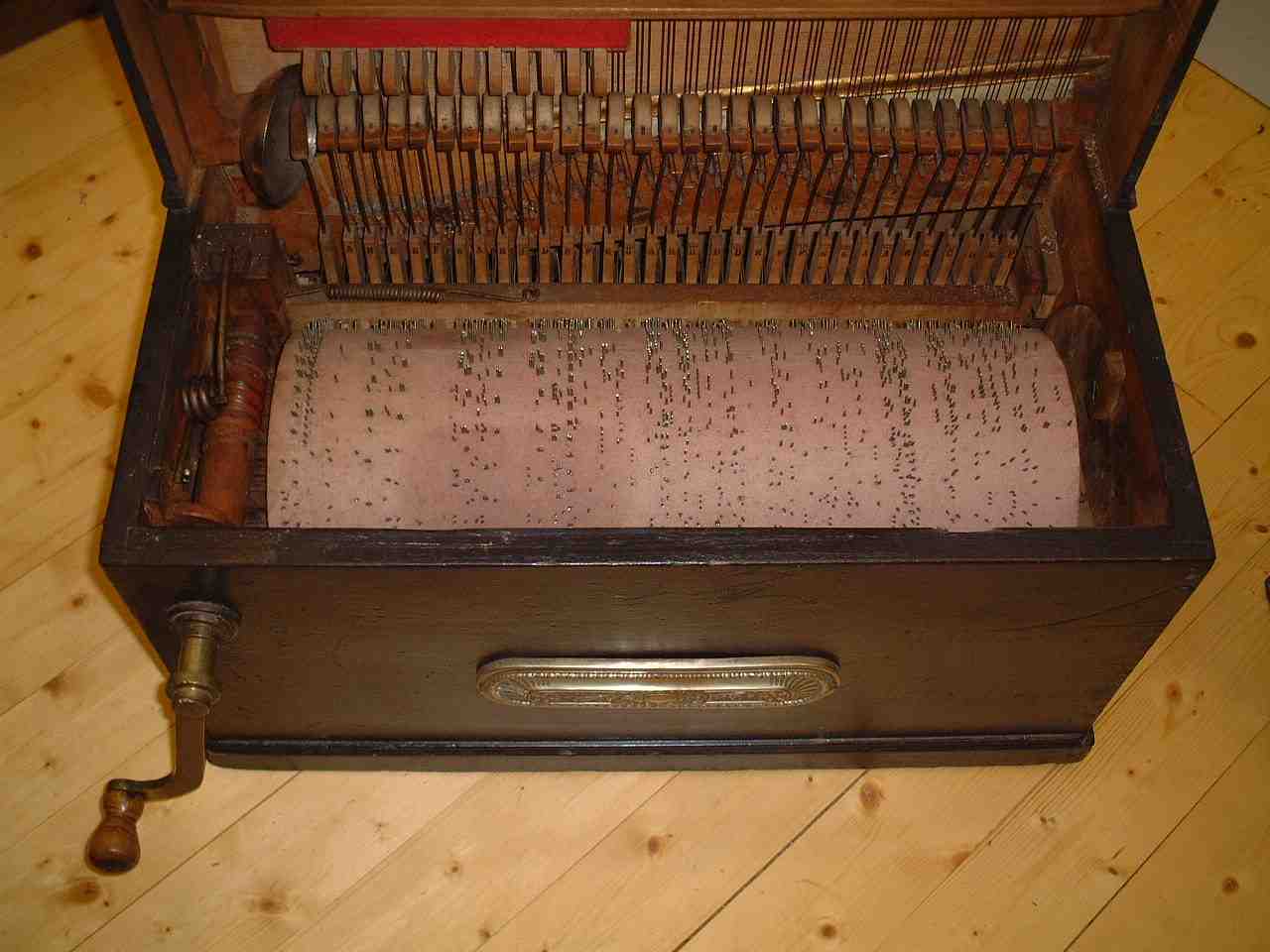
5. Barrel