This is the only Ampico roll like this that I've ever seen and it might
be the earliest Ampico roll known. A big thank you goes to Robert Perry
for spotting it and tipping me off about it.

The roll is so early (1911) that it might predate the use of the brand
name "Ampico". It also seems to predate the early and more common
Stoddard-Ampico and Ampico Artigraphic labeled rolls.

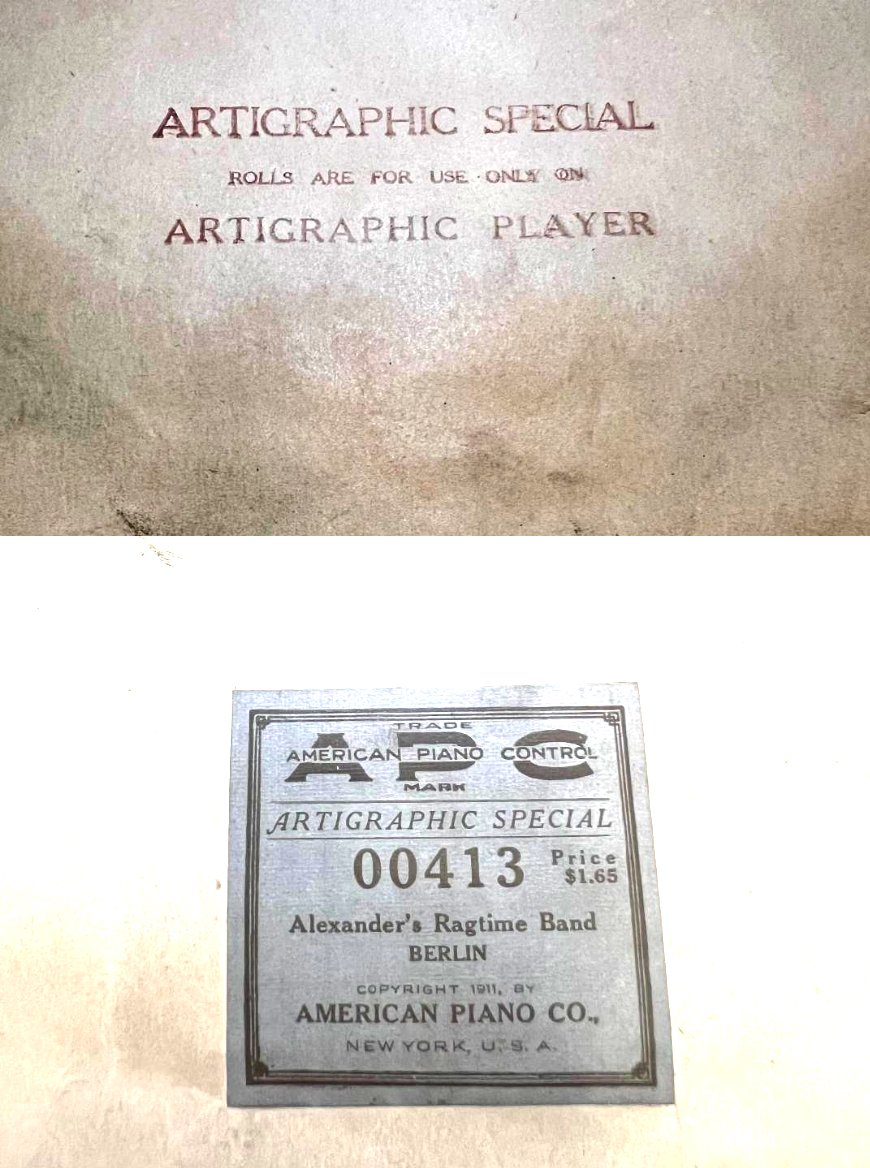
The photo of the roll leader shows that it's an APC (American Piano
Control) Artigraphic Special of the song "Alexander's Ragtime Band", "for
use only on the Artigraphic Player", with no mention of "Ampico". A
conclusion could be drawn that the first Ampico expression player was
called the Artigraphic Player followed by the Stoddard-Ampico player.

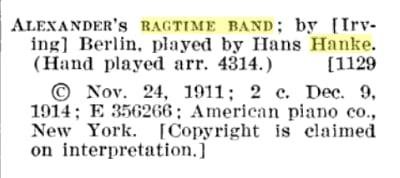
The copyright entry for the original Rythmodik 88-note roll, provided by
Robert Perry, is shown below. The roll number was reversed when they
added Ampico coding to Rythmodik 88-note rolls. The original Rythmodik
number would be reversed in the new Ampico coded version, which in
this case is 00413.

There's no artist listed on the APC label; however, we can reasonably
assume that Hans Hanke was the artist on the Ampico coded version
since it has the reversed Rythmodik number indicative of its origin.

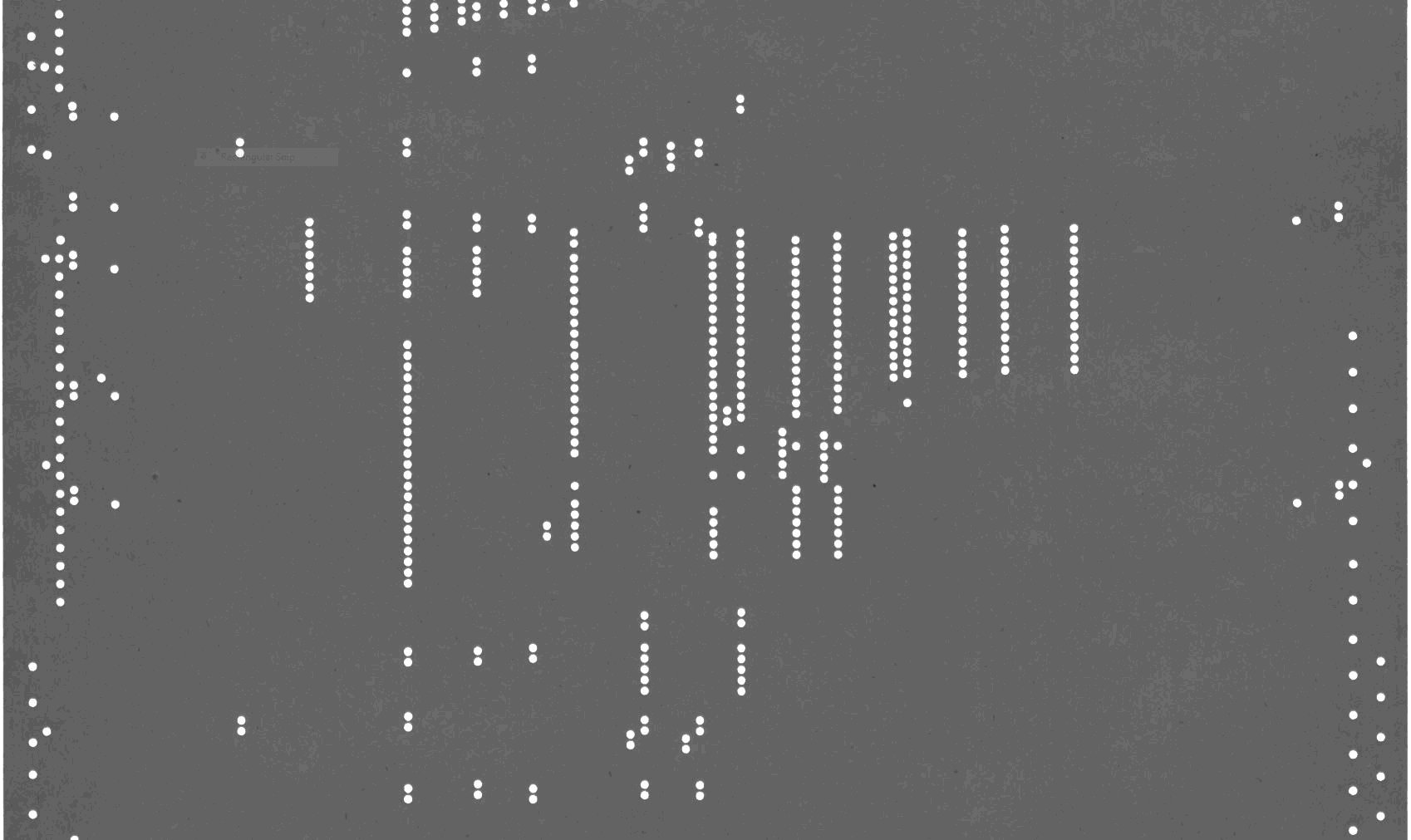
The Ampico coding is quite primitive and seems to follow what Dean Howe
described in an article he published in the April 1973 AMICA Bulletin
as "Type X1 Ampico coding" that was used in 1911-13 time period. Here
is Dean's explanation of Type X1 coding:

"X 1 (c. 1911-13). X indicates the slow crescendo consisted of separated
dots (the reason for the long slots in the tracker bars all through the
years). This was used so the paper would be strong and great accuracy
was not needed since the Stoddard slow crescendo was very slow."

"1 indicates the first type of step intensity perforation. It consisted
of single dots for lock or cancel, or if a change (partial-continuation)
in intensity was needed, then a single dot cancel and double dot
intensity lock for the first intensity to be continued was used."

"In theory, this is all that is necessary according to the system,
but if anything was sluggish, then there were misreadings by the
expression mechanisms. This system seems to have been used for rolls
numbered up to 500 (or 005 as they appeared in reverse)."

The coding on this roll appears to predate the Type X1 coding
described above by Dean Howe. Anthony Robinson made the observation
that "there are no fast crescendos that would normally occupy the
5B and 5T tracks. Instead, Rewind is in 5T rather than 8T where it
is normally found." It appears that the fast crescendos had yet to
be implemented.

Anthony also made another keen observation: "At that early stage,
there can only have been a very small number of pianos out there as
they would all have needed modifying to prevent them from rewinding
whenever they encountered treble fast crescendos in later rolls.
Before 8T was appropriated for rewind there were potentially 84
playing notes rather than 83. I wonder if there are any 84 note
stacks still in existence, if indeed there ever were."

Do any other collectors have one of these early Artigraphic Special
rolls or have you seen one?

Michael Swanson
Poway, California
mikeswanson@rocketmail.com.geentroep

 [ Fig. 1. Artigraphic Special roll leader
 [ https://www.mmdigest.com/Attachments/26/03/15/260315_203551_APC_Artigraphic.png

 [ Fig. 2. Copyright entry for Alexander's Ragtime Band arrangement
 [ https://www.mmdigest.com/Attachments/26/03/15/260315_203551_arrangement_copyright.jpg

 [ Fig. 3 Type X1 Ampico coding
 [ https://www.mmdigest.com/Attachments/26/03/15/260315_203551_Ampico_00413_roll_image.jpg
|
 Mechanical
Music Digest™ Archives
Mechanical
Music Digest™ Archives