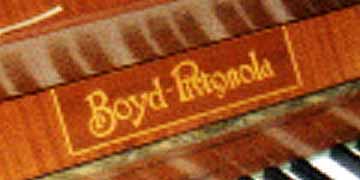
Boyd Pistonola
Boyd Pistonola Player Action - Photos
photographs by David Evans, Hampshire, England
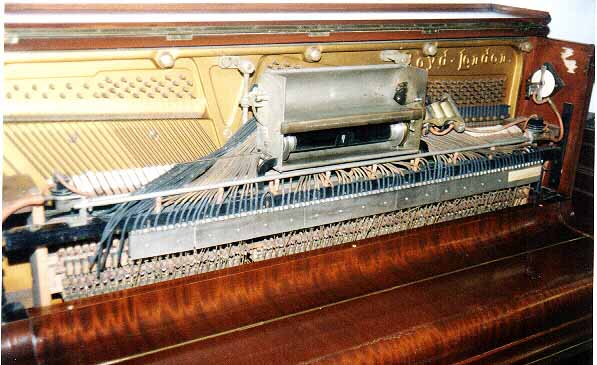

pistonola_action2.jpg (72 kb)
pistonola_kboard2.jpg (33 kb)

The Boyd Pistonola was developed by H C Goldman and C F Webb in London 
around 1912.  It was first demonstrated in November 1913 at a concert held in 
Ilford Town Hall, Essex, England, and again in April 1914 at the Corn Exchange, London. 


pistonola_regunit1.jpg (70 kb)
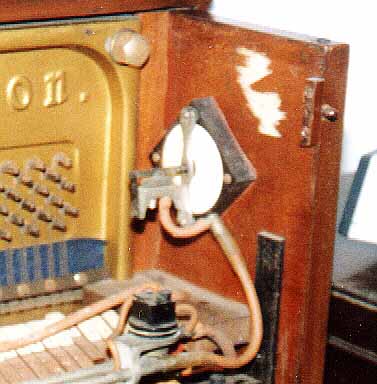
Roll motor regulator mounted on the side of the case.
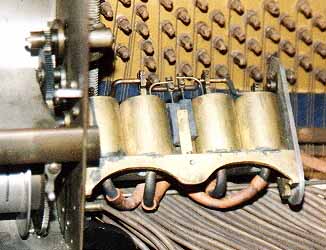
 

pistonola_rollmotor1.jpg (55 kb)
Four-piston roll motor
 

pistonola_feeders1.jpg (72 kb)
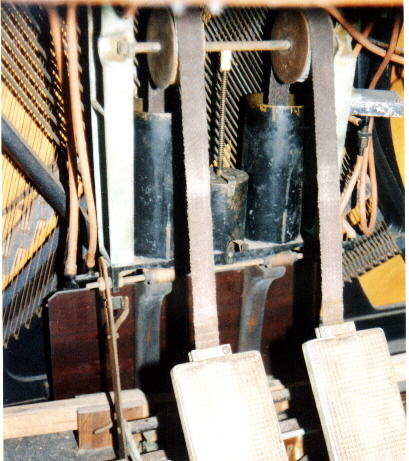
Feeder pistons and spring-loaded reservoir (center)
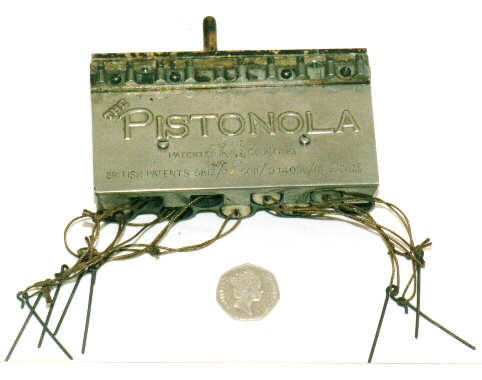

pistonola_pistons1.jpg (72 kb)
The mechanism is ingenious, being the smallest player action ever devised.  In place of banks of large pneumatic motors it has a single tier of pistons for the note-striking and four in line for the roll-drive motor.  Even the feeders are pistons, and the reservoir is a spring-loaded piston. Valves are ball-bearings. By the 1920s Boyd were producing a more conventional player piano. 

pistonola_2pistons.jpg (14 kb)
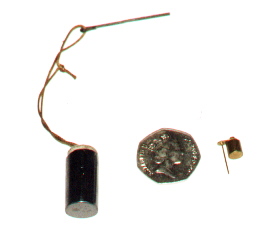
Only the largest (action) piston is graphite, diameter is 1/2". 
The smaller pistons for the primary and secondary valves are brass.


26 February 2000

Please Support Publication of the MMD with your Generous Donation
No PayPal account required
SSL Certificate
by
Let's Encrypt