"Snot Nose", the bravest organ of the Netherlands
by Hans van Oost
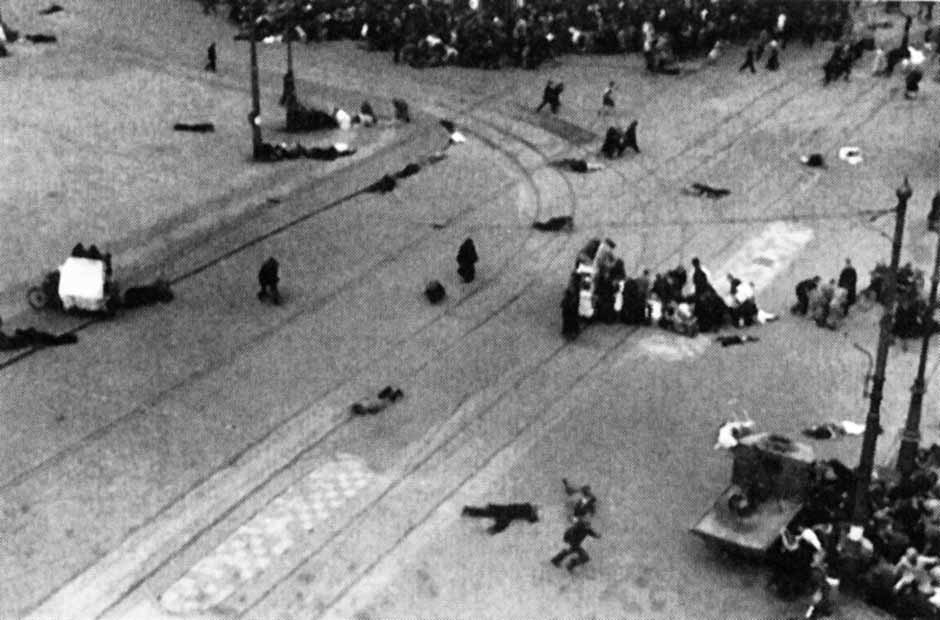
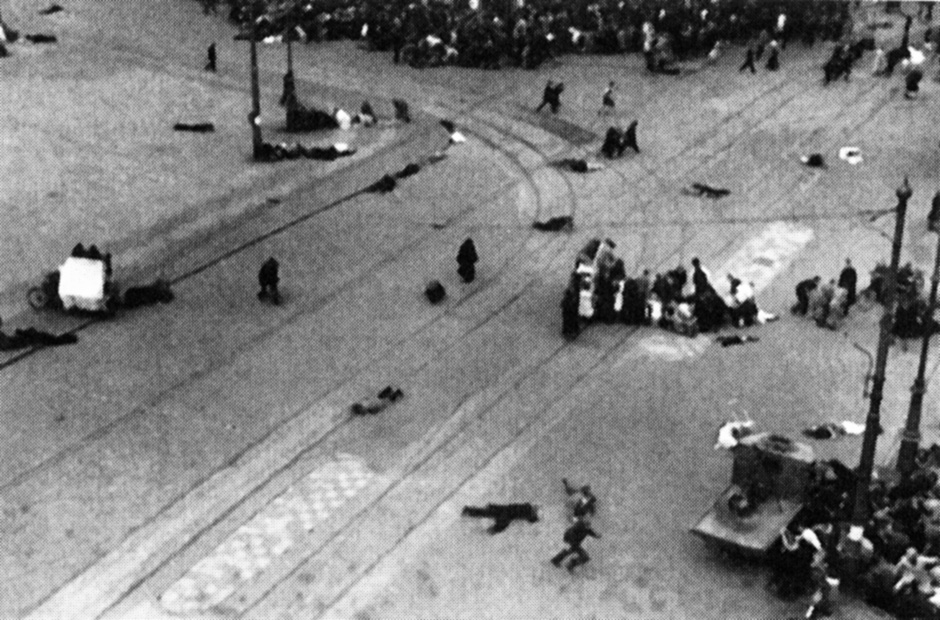
May 7th, 1945 -- het Snotneusje stops the bullets
[Click here for high-resolution image
(271 kb)]
May 7th, 1945. Two days earlier the German army officially surrendered
to the Allied forces, and the Second World War in Europe was over.
After
suffering five long years of German occupation and a winter with extreme
food shortage (elderly Dutchmen still speak of the famine of "de hongerwinter"),
the residents of Amsterdam celebrated at "the Dam" (the central plaza in
Amsterdam) with happy music played by one of the still-working Dutch street
organs named "het Snotneusje".
The liberation festivities irritated a group of disgruntled German SS
soldiers who were drinking in their "Grote Club" (on the corner of the
Kalverstraat and the Dam) and wondering about their future. That
afternoon they went outside with their machine guns and fired random salvos
at the crowd. Several people were killed and many were wounded. By sheer
luck the organ grinder, who was working on the side of the organ facing
the gunners, managed to get behind his instrument himself. Onlookers
ran, and dozens of people took cover behind the street organ, which was
then riddled with machine gun bullets.
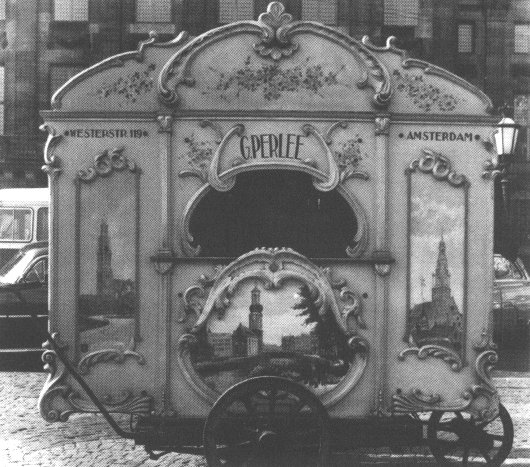
Gijs Perlee's draaiorgel "het Snotneusje" in the 1950s.
According to my dictionary the word 'snotneusje' should be translated as 'snotty nose'. Figuratively, the word means something like brat, urchin, or whipper-snapper. Take your pick. The organ was rather small but loudly voiced !
The draaiorgel "het Snotneusje" is known to be the bravest organ of the Netherlands, and it is now preserved in the Amsterdam Historic museum.
Hans Van Oost
The Netherlands
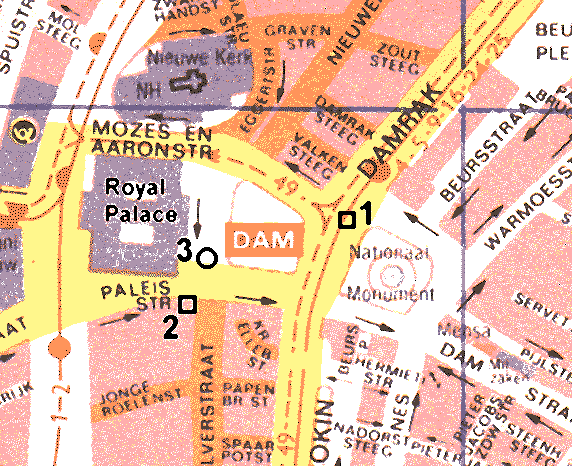
Situation Map
1. Het Snotneusje playing nearby streetcar track
2. Grote Club at corner Kalverstraat
3. Position of shooters
04 October 1999